Airstream Bambi 20FB vs Jayco Jay Flight Bungalow 40RLTS
2026 Travel Trailer comparison · side-by-side specs, verdict, and who each is best for.
Quick verdict
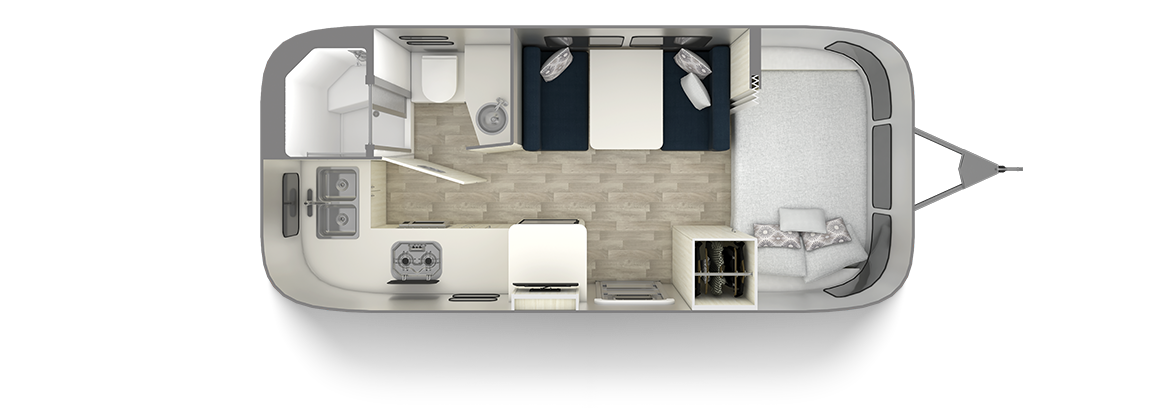
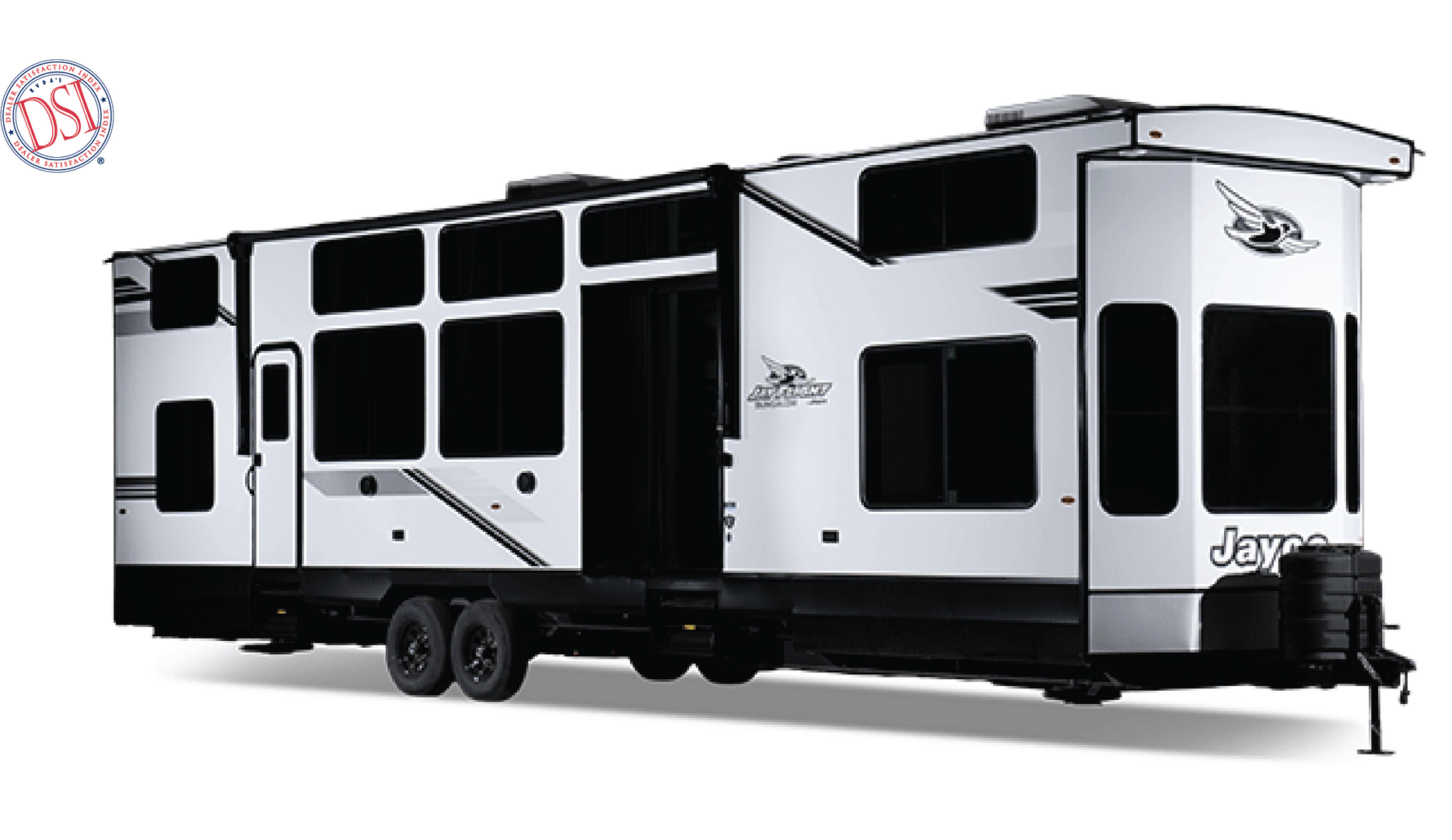
Two Travel Trailers at adjacent prices buying fundamentally different camping. Airstream Bambi 20FB at $75,400 is a 20.58-ft aluminum monocoque touring trailer, 3,900 lbs dry, single-axle, with lithium battery and 100W solar. Jay Flight Bungalow 40RLTS at $84,068 is a 40.33-ft 102-in wide-body destination park-model TT, 11,560 lbs dry, with king bed, residential 12V fridge, dual 15K BTU A/C, washer/dryer prep, and Climate Shield insulation.
The price-to-size inversion you'd expect doesn't apply here — the Bungalow is $8,668 more for almost twice the trailer. That's because the aluminum monocoque commands a premium per linear foot. The Bambi 20FB is built for mobility: 3,900 lbs pulls behind any V8 SUV, the front bedroom layout is clean, and the aluminum shell holds resale exceptionally well.
For this Travel Trailer comparison, the Bambi 20FB is for traveling couples. The Bungalow 40RLTS is for seasonal-site owners. Both make sense for their respective use cases at this money tier.
Side-by-side specs
| Airstream Bambi 20FB | Jayco Jay Flight Bungalow 40RLTS | |
|---|---|---|
| MSRP | $75,400 | $84,068 |
| Length | 20'7" | 40'4" |
| Dry weight | 3,900 lbs | 11,560 lbs |
| GVWR | 5,000 lbs | 13,500 lbs |
| Sleeps | 4 | 4 |
| Slides | 0 | 1 |
| Fresh tank | 23 gal | 52 gal |
| Grey tank | 30 gal | 32.5 gal |
| Black tank | 18 gal | 39 gal |
| LP | 9.4 gal | 60 gal |
| Solar | 100W | — |
| Inverter | — | — |
| Generator | — | — |
| Bath | full | full |
| Bed | queen | king |
| 4-season | No | Yes |
| Off-road | No | No |
| Outdoor kitchen | No | No |
| Washer/dryer | none | prep |
| Residential fridge | No | Yes |
Where Airstream Bambi 20FB wins
- 7,660 lbs lighter dry weight (3,900 vs 11,560) — pulls behind midsize SUVs
- 19.75 ft shorter at 20.58 ft — fits anywhere
- $8,668 cheaper sticker at $75,400
- Lithium battery + 100W solar standard — real off-grid power for a 20-ft trailer
- Aluminum monocoque construction with strongest resale retention in the segment
Where Jayco Jay Flight Bungalow 40RLTS wins
- 102-in wide-body vs 96 in — meaningfully more residential interior dimensions
- King bed standard vs queen on the Bambi — significant comfort upgrade
- Residential 12V fridge, washer/dryer prep, dual 15K BTU A/C units — destination spec
- 60 gal LP propane vs 9.4 gal — 6.4x propane capacity for year-round seasonal use
- Climate Shield four-season insulation; Bambi 20FB isn't four-season
Pick the Airstream Bambi 20FB if…
Pick the Airstream Bambi 20FB if you want a premium touring Travel Trailer that goes anywhere and holds resale value. The aluminum monocoque is the headline — most-recognizable shell in the segment, 60-70% of MSRP retained after 5 years. At 3,900 lbs dry, it pulls behind any V8 SUV or properly-equipped half-ton. The 100W solar and lithium battery are enough for weekend dry camping. Best for a couple who travels often, parks at varied sites, and treats the Bambi as both a touring rig and a mobile asset.
Pick the Jayco Jay Flight Bungalow 40RLTS if…
Pick the Jayco Jay Flight Bungalow 40RLTS if you've got a seasonal site or family campground long-term lease and you want a destination Travel Trailer that functions as a small home. The 102-inch wide-body plus king bed, washer/dryer prep, residential fridge, and dual A/C make it a comfortable seasonal residence. Climate Shield insulation supports winter use in mild climates. Best for retirees with a permanent winter or summer site who tow the trailer rarely.
Frequently asked
Can a half-ton tow the Bungalow?
Marginal. At 11,560 lbs dry plus 1,940 lbs cargo, you really want a 3/4-ton truck. Most Bungalow owners only tow it once or twice a year between sites.
Which has the king bed?
Only the Bungalow 40RLTS. The Bambi 20FB has a queen.
Which holds value better?
The Airstream Bambi 20FB by a wide margin — aluminum monocoque and brand recognition preserve about 60-70% of MSRP after five years. Park-model destination trailers depreciate more quickly because they're rarely moved or resold.