Airstream Caravel 20FB vs Jayco Jay Flight Bungalow 40RLTS
2026 Travel Trailer comparison · side-by-side specs, verdict, and who each is best for.

Quick verdict
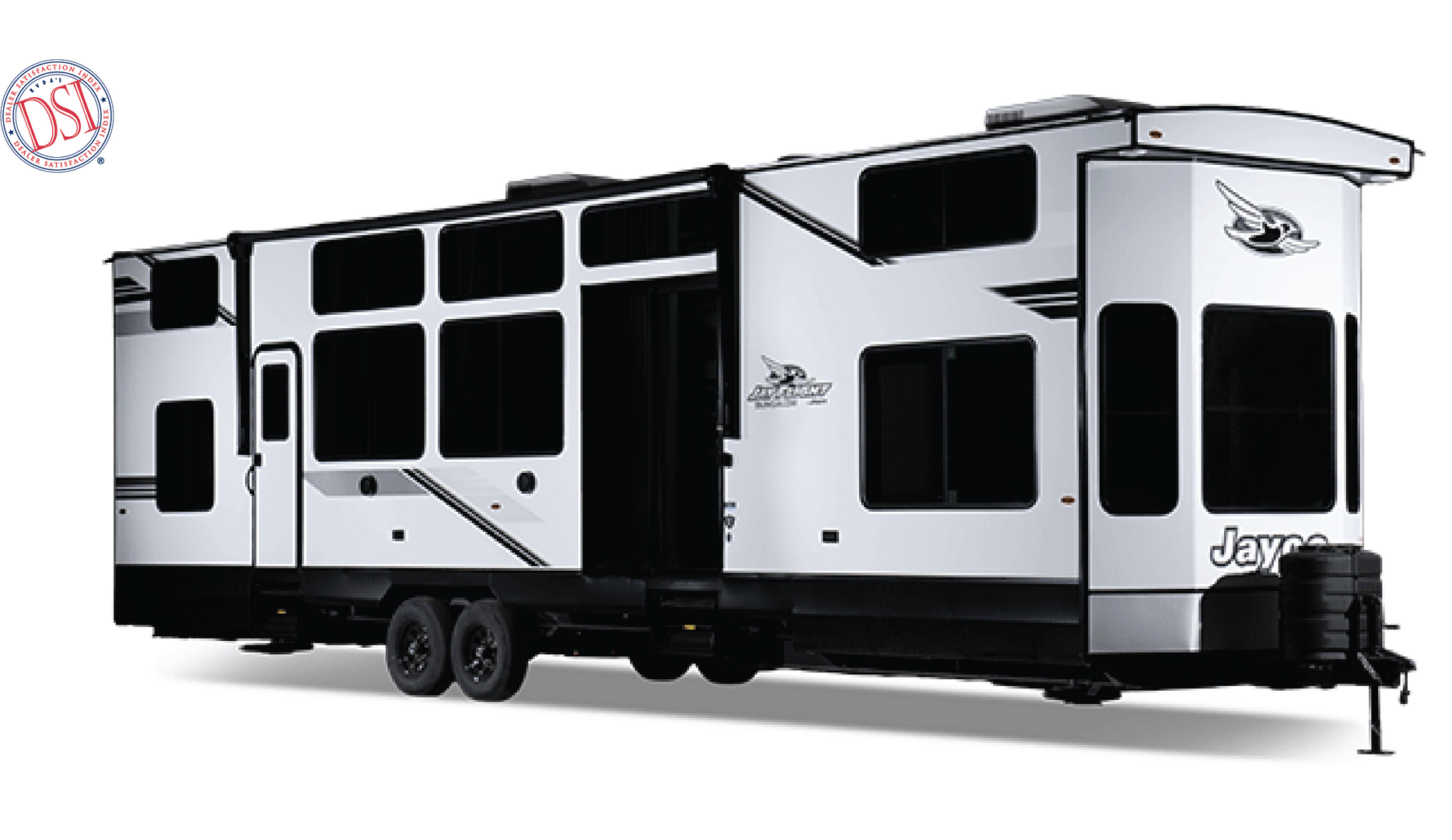
Jay Flight Bungalow 40RLTS at $84,068 is actually cheaper than the Airstream Caravel 20FB at $89,400 — a $5,332 reversal of what you might expect given the 19-ft length difference. The Caravel is 21 ft long and 4,100 lbs dry with an aluminum monocoque. The Bungalow is 40.33 ft long and 11,560 lbs dry, a 102-inch wide-body destination park-model Travel Trailer.
The Caravel 20FB packs in lithium battery, 100W solar, and a 2000W inverter standard — a solid off-grid loadout for a 21-ft trailer. Front bedroom layout with queen, 23 gal fresh. The Bungalow 40RLTS goes the opposite direction: king bed, residential fridge, dual 15K BTU A/C units, 60 gal LP, Climate Shield insulation, washer/dryer prep — a park-model residence with Travel Trailer chassis underneath.
Like the other Airstream-vs-Bungalow comparisons, this Travel Trailer pair is really a category-fork. Caravel 20FB: aluminum touring brand-classic. Bungalow 40RLTS: destination seasonal residence. Different decisions entirely.
Side-by-side specs
| Airstream Caravel 20FB | Jayco Jay Flight Bungalow 40RLTS | |
|---|---|---|
| MSRP | $89,400 | $84,068 |
| Length | 21' | 40'4" |
| Dry weight | 4,100 lbs | 11,560 lbs |
| GVWR | 5,000 lbs | 13,500 lbs |
| Sleeps | 4 | 4 |
| Slides | 0 | 1 |
| Fresh tank | 23 gal | 52 gal |
| Grey tank | 30 gal | 32.5 gal |
| Black tank | 18 gal | 39 gal |
| LP | 9.4 gal | 60 gal |
| Solar | 100W | — |
| Inverter | 2000W | — |
| Generator | — | — |
| Bath | full | full |
| Bed | queen | king |
| 4-season | No | Yes |
| Off-road | No | No |
| Outdoor kitchen | No | No |
| Washer/dryer | none | prep |
| Residential fridge | No | Yes |
Where Airstream Caravel 20FB wins
- 7,460 lbs lighter dry weight (4,100 vs 11,560) — pulls behind a properly equipped midsize SUV
- 19.33 ft shorter at 21 ft — fits anywhere
- Lithium battery + 100W solar + 2000W inverter standard — real off-grid power
- Aluminum monocoque construction with strong resale value retention
- Single-axle agility for tight campsite maneuvering
Where Jayco Jay Flight Bungalow 40RLTS wins
- $5,332 cheaper sticker at $84,068 vs $89,400
- 102-in wide-body vs 96 in on the Caravel — meaningfully more residential interior dimensions
- King bed vs queen on the Airstream — major comfort upgrade for daily use
- Residential 12V fridge, washer/dryer prep, dual 15K BTU A/C units — true destination spec
- Climate Shield four-season insulation; the Caravel 20FB isn't four-season
Pick the Airstream Caravel 20FB if…
Pick the Airstream Caravel 20FB if you want a premium touring Travel Trailer that goes anywhere and holds value. The lithium battery, 100W solar, and 2000W inverter give you real short-stay off-grid capability, and the aluminum monocoque is the most-recognizable shell in the segment. At 4,100 lbs dry, a half-ton SUV pulls it easily. Best for a couple who travels often, parks at varied site types, and values the Airstream brand cachet alongside actual mobility.
Pick the Jayco Jay Flight Bungalow 40RLTS if…
Pick the Jayco Jay Flight Bungalow 40RLTS if you've already got a seasonal site or campground long-term lease and you want a destination Travel Trailer that functions like a small home. The 102-inch wide-body, king bed, washer/dryer prep, residential fridge, and dual A/C make it a comfortable parked-and-stay residence. Climate Shield insulation supports winter use. Best for retirees with a permanent winter or summer site who plan to tow the trailer once or twice a year, not for routine touring.
Frequently asked
Which has more usable interior space?
By a wide margin, the Bungalow 40RLTS — 40 ft long, 102 in wide. The Caravel 20FB is 21 ft long, 96 in wide.
Which has lithium house battery?
Only the Airstream Caravel 20FB lists a lithium battery. The Bungalow 40RLTS doesn't specify a battery type.
Is the Bungalow 40RLTS really towable?
Yes, but it needs a 3/4-ton truck minimum at 11,560 lbs dry. Most owners only tow it once or twice a year between seasonal sites.