Heartland North Trail 190MB vs Winnebago Micro Minnie 1821FB
2026 Travel Trailer comparison · side-by-side specs, verdict, and who each is best for.
Quick verdict
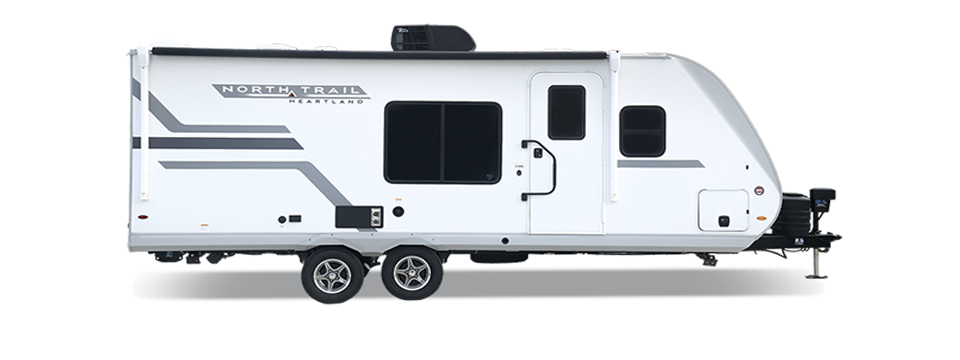
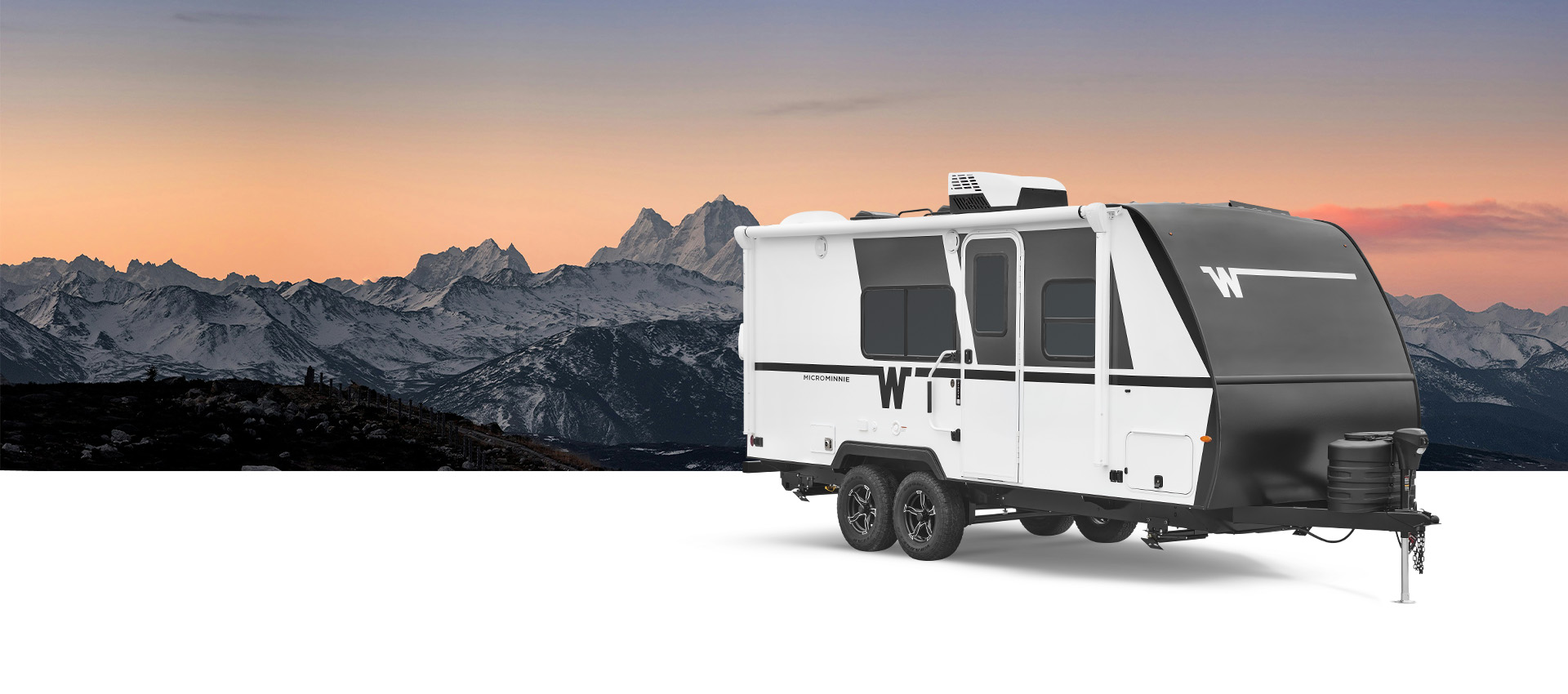
These ultra-lite Travel Trailers price within $288 of each other ($37,493 vs $37,781) and both serve the couples weekend buyer. The Heartland North Trail 190MB is 23'4" at 4,885 lbs dry, sleeps 2, runs 30A service, and the Heartland frame. The Winnebago Micro Minnie 1821FB is 21'3" at 4,086 lbs dry with a compact 84" body width, sleeps 3, includes full bath, queen bed, 31 gal fresh, 9.5 gal LP, solar prep, and four-season insulation.
The Micro Minnie 1821FB is 799 lbs lighter dry, 2'1" shorter, and 12" narrower than the North Trail 190MB - the narrowest body in this comparison. It also documents tank capacities, bed layout, and four-season certification that the North Trail leaves blank. The Heartland North Trail 190MB counters with 65 sq ft more interior volume potential from its 23'4" length and standard 96" body width.
For Travel Trailer ultralight buyers, the Micro Minnie 1821FB wins on documented specs and four-season capability; the North Trail 190MB offers more interior volume.
Side-by-side specs
| Heartland North Trail 190MB | Winnebago Micro Minnie 1821FB | |
|---|---|---|
| MSRP | $37,493 | $37,781 |
| Length | 23'4" | 21'3" |
| Dry weight | 4,885 lbs | 4,086 lbs |
| GVWR | 6,400 lbs | 5,500 lbs |
| Sleeps | 2 | 3 |
| Slides | — | 0 |
| Fresh tank | — | 31 gal |
| Grey tank | — | 25 gal |
| Black tank | — | 25 gal |
| LP | — | 9.5 gal |
| Solar | — | — |
| Inverter | — | — |
| Generator | — | — |
| Bath | — | full |
| Bed | — | queen |
| 4-season | No | Yes |
| Off-road | No | No |
| Outdoor kitchen | No | No |
| Washer/dryer | none | none |
| Residential fridge | No | No |
Where Heartland North Trail 190MB wins
- 2'1" longer for more interior volume
- 12" wider body for more side-to-side room
- Slight MSRP advantage of $288
- Standard 96" body matches conventional layout
Where Winnebago Micro Minnie 1821FB wins
- 799 lbs lighter dry weight (4,086 vs 4,885 lbs)
- Documented 31 gal fresh, 25 gal grey, 25 gal black
- 9.5 gal LP capacity specified
- Four-season insulation certified
- Full bath with queen bed layout documented
Pick the Heartland North Trail 190MB if…
Pick the Heartland North Trail 190MB if you want a standard-width Travel Trailer at the entry tier with more interior room than a compact-bodied competitor. The 96" body and 23'4" length give a conventional layout couples will recognize. At $37,493 it slightly undercuts the Micro Minnie 1821FB, and the 4,885 lb dry weight is still half-ton territory. Buyers prioritizing layout volume over tank documentation will pick the North Trail.
Pick the Winnebago Micro Minnie 1821FB if…
Pick the Winnebago Micro Minnie 1821FB if you tow with a midsize SUV and want a documented four-season ultralight. The 4,086 lb dry weight fits inside most midsize SUV ratings, the 84" body width tracks behind the tow vehicle better at highway speed, four-season insulation handles winter camping, and Winnebago publishes complete tank, LP, and layout specs. At $37,781 you pay $288 more for documented capability the North Trail 190MB doesn't list. Buyers wanting verified four-season operation should pick the Micro Minnie.
Frequently asked
Why is the Micro Minnie only 84 inches wide?
Winnebago's Micro line uses a 7-foot-wide chassis for better highway tracking behind midsize SUVs and easier parking in residential driveways. The narrower body sacrifices side-to-side interior room for towing ease.
Can both run all four seasons?
The Micro Minnie 1821FB is four-season certified by Winnebago. The North Trail 190MB's four-season status isn't published in catalog data; assume three-season operation requiring winterization.
Which has more documented water capacity?
The Micro Minnie 1821FB publishes 31 gal fresh, 25 gal grey, 25 gal black, and 9.5 gal LP. The North Trail 190MB doesn't publish any of those - confirm with the dealer before buying for boondock planning.